2025 Annual Report
The Power of Learning Together
Our grantee-partners are taking different paths in weathering the challenges of the last few years: diversifying funding sources, consolidating services, or strengthening their advocacy acumen. But one approach that has proven essential is finding strength and sustainability by collaborating with other organizations.
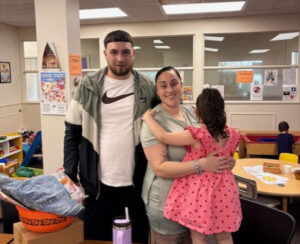
Mitayah Donerlson (P.O.W.E.R. Inc.) and Lauren Peters (YWCA Jamestown) work together during an Imagine Nonviolence learning collaborative session.
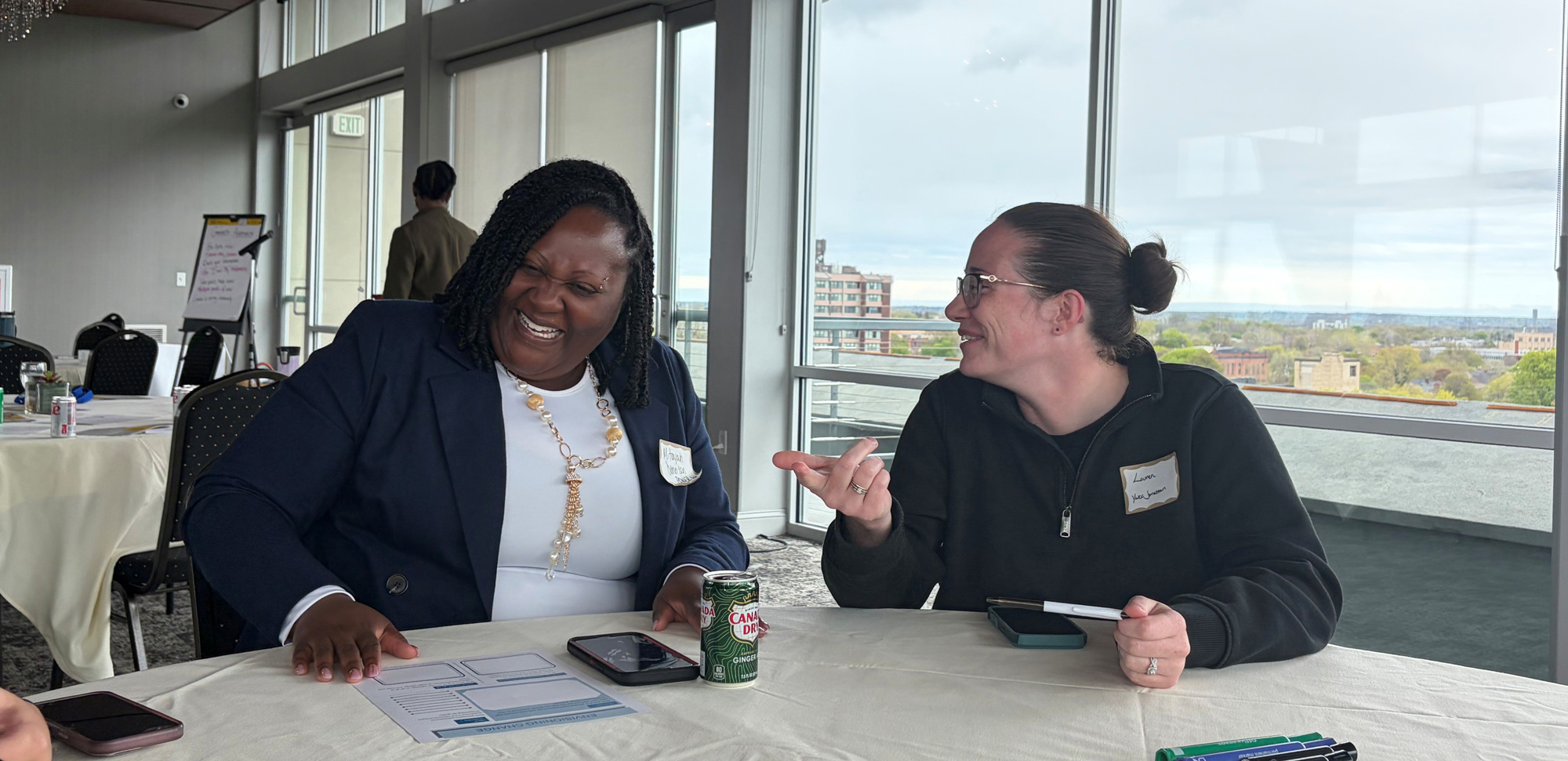
The Health Foundation’s Imagine Nonviolence program, launched in 2024, has brought together two cohorts of community-based organizations across western and central New York to explore ways of preventing firearm violence and injury in the communities we serve.
The program reflects the fact that gun violence prevention is a complex topic that touches communities in different ways. Some Imagine Nonviolence grantees serve people in cities, and others are working with rural populations. Some focus on creating safer communities to reduce the risk of violence, while others are helping firearm owners think about safe handling and injury prevention.
With so many perspectives, you might think Imagine Nonviolence participants don’t have much to learn from each other. A recent evaluation is showing us the opposite.
Different Perspectives, Shared Solutions
As part of the program, Imagine Nonviolence grantees participate in a learning collaborative—the opportunity to share what is emerging in their own work and learn from each other. In an evaluation of the first cohort that was released in 2026, participants noted how powerful it was to work together in the learning collaborative.
Paula Kovanic-Spiro, LMSW, MPH, is the director of the Buffalo Rising Against Violence Trauma Recovery Center (BRAVE TRC) at Erie County Medical Center. BRAVE TRC supports western New Yorkers through mental health care and support services to reduce and repair the impact of trauma caused by violence.
BRAVE TRC mostly serves people in the city of Buffalo or surrounding areas who are experiencing personal or community-level violence. By participating in Imagine Nonviolence, Paula and her team had the chance to interact with organizations who are taking a vastly different approach to the work.
“It was nice to meet people from rural communities who are doing something so different,” says Paula. She points to how those organizations typically interact with communities where lawful gun ownership is a cherished tradition and where gun safety—through safe storage and handling—is a priority issue. “We’re having different conversations. We learn things from each other.”
By the Numbers: Imagine Nonviolence Cohort 1
- 2959 gunlocks and safe storage devices were distributed to the community – over 100% of the expected number
- 387 community members and 333 staff and providers were trained on firearm safety and injury prevention
- 83% of staff and providers who participated in training report being knowledgeable about firearm safety and injury prevention – representing a 20% increase from before training
- 84% of staff and providers who participated in training report being comfortable talking with clients about firearm safety and injury prevention – representing a 22% increase from before training
She shared the story of an older man who came to BRAVE TRC and was dealing with social anxiety. Because of what they had learned from their fellow grantees who serve older adults, their team knew that screening for guns in the home is important in cases like this. “We learned how to talk to someone in this situation and to screen for guns, and we chatted with him about caregiver burnout.”
Having Conversations That Keep Kids Safe
A family celebrates at an Early Head Start moving up ceremony led by REACH CNY.
In central New York, REACH CNY is serving people across geographic divides—in both urban Onondaga County and more rural areas of Oswego County. REACH CNY offers programs and initiatives that help improve the health of women, infants, and families. Some of their services include parenting classes, and participating in Imagine Nonviolence helped them learn how to approach gun safety with parents in a culturally sensitive way.
After learning about it through Imagine Nonviolence, REACH CNY incorporated BeSMART training into their parenting classes. BeSMART is a widely used framework that helps parents store their own guns safely and trains them how to have conversations with other people in their lives—like the parents of their children’s friends—about safe storage. They complement the training by providing gun locks to participants who need them. The REACH CNY team has brought the training to more than 100 families in Onondaga County and 70 in Oswego County.
“The families in our parenting program might not have otherwise thought to ask other parents if there are guns in the home, but they want to keep their kids safe,” says Kathy Harter, Executive Director of REACH CNY.
REACH CNY’s Director of Education Kathy McDonald attributes the training’s impact to how it was integrated into established parenting classes. “These folks were already coming to us for programming, and they trusted us,” she says. “That made it easier.”
Kathy and Kathy say that the collaborative approach to Imagine Nonviolence helps ensure gun safety information reaches more people with consistent messaging.
“If you tell people something one time, it may not click or they may not be receptive to it. If it’s out there in the greater community—coming from their doctor, their therapist—they start to get the same message.”
Kathy Harter, Executive Director of REACH CNY